In my time mentoring learners for Skill-Wanderer, there is one moment I have watched play out again and again. Different people, different backgrounds, different points in their journey, and yet almost the same words every time. I find it rather amusing, though perhaps not for the reason you would expect.
Before I get to it, I want to start somewhere else entirely, with something most of us have never quite thought through, even though it has been sitting in plain sight the whole time. It involves a horse, a lion, an elephant, and the question of what makes us humans so special in the first place.
We Would Lose Most Fair Fights
We can probably all agree that humans are the most advanced species on the planet. We write books, build cities and send machines to other planets. No other animal comes close.
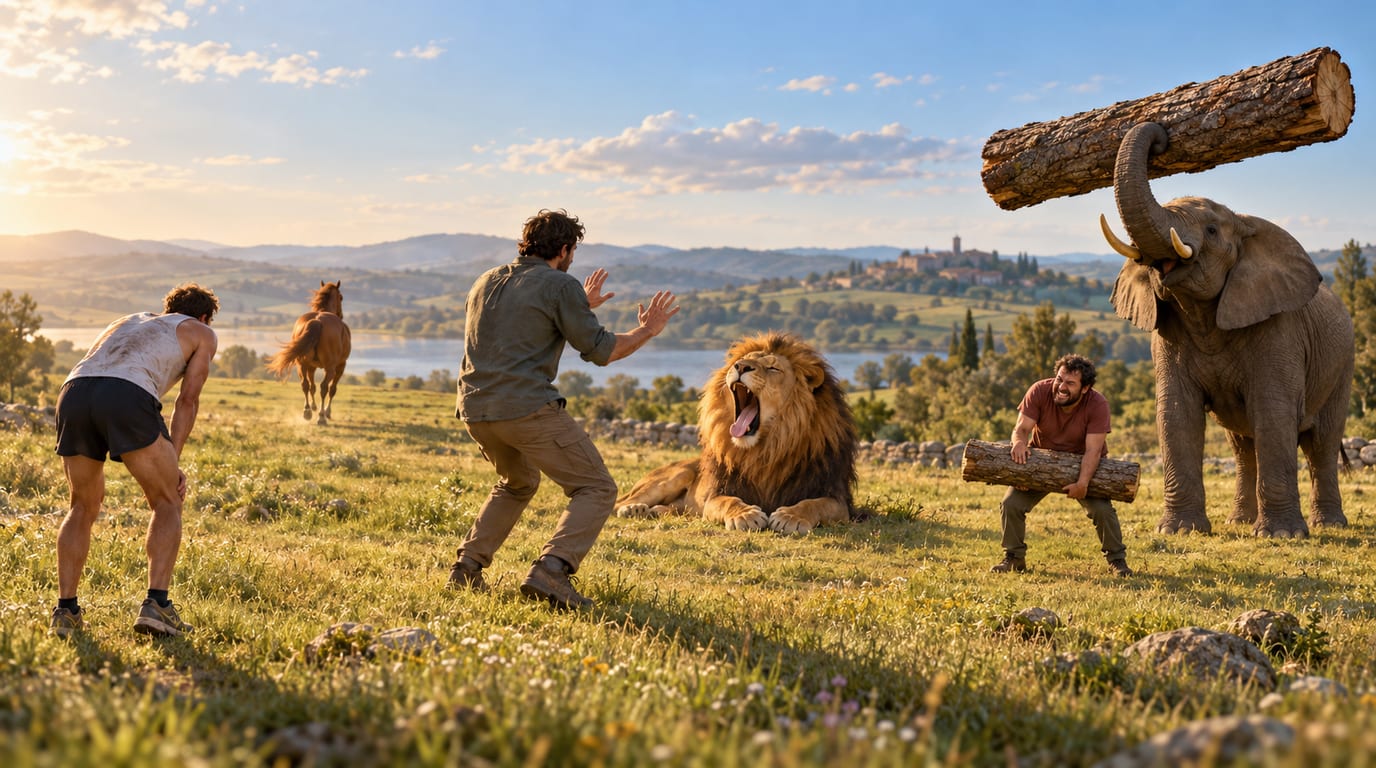
But that is only true of the species as a whole. Put a single human up against a single animal, one on one, with no help from anyone, and the picture changes very quickly. It turns out we are not great at everything. To be honest, we are not even great at most things.
Race an ordinary person against an ordinary horse, and you do not need to watch the race to know how it ends. Face a lion with nothing but your bare hands, and the outcome is even easier to predict, and a lot less pleasant to watch. Try to out-lift an elephant, and the elephant will probably not even notice there was a contest.
Some people have even put the horse one to the test. Since 1980, the small Welsh town of Llanwrtyd Wells has held a yearly Man versus Horse Marathon, which started, as these things often do, with an argument in a pub. Runners and horses race each other over more than twenty miles of Welsh countryside. For the first twenty-four races, no runner could beat the horses. One finally did in 2004, and in all the years since, runners have managed it only a handful of times.
Why, then, are we the ones called the most advanced species, at least in the science books?
So We Never Fight Fair
The answer is the one thing we have that no other animal can match: our brain. And we use it to give ourselves a thoroughly unfair advantage.
As a species, we have never really competed cleanly. Or, to put it a little more kindly, we have always competed on different things. Instead of growing faster legs, sharper claws or a stronger back, we got better at thinking, and then we used that thinking to make tools.
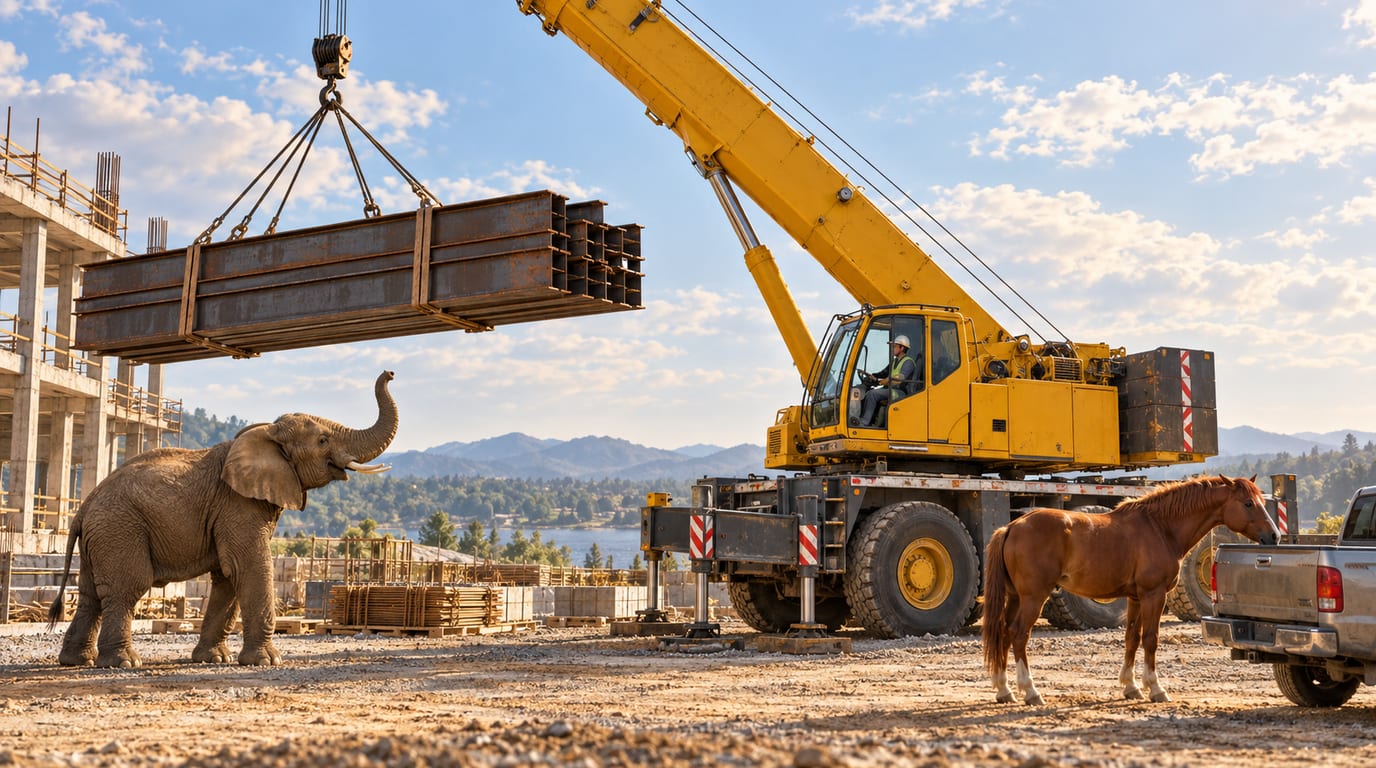
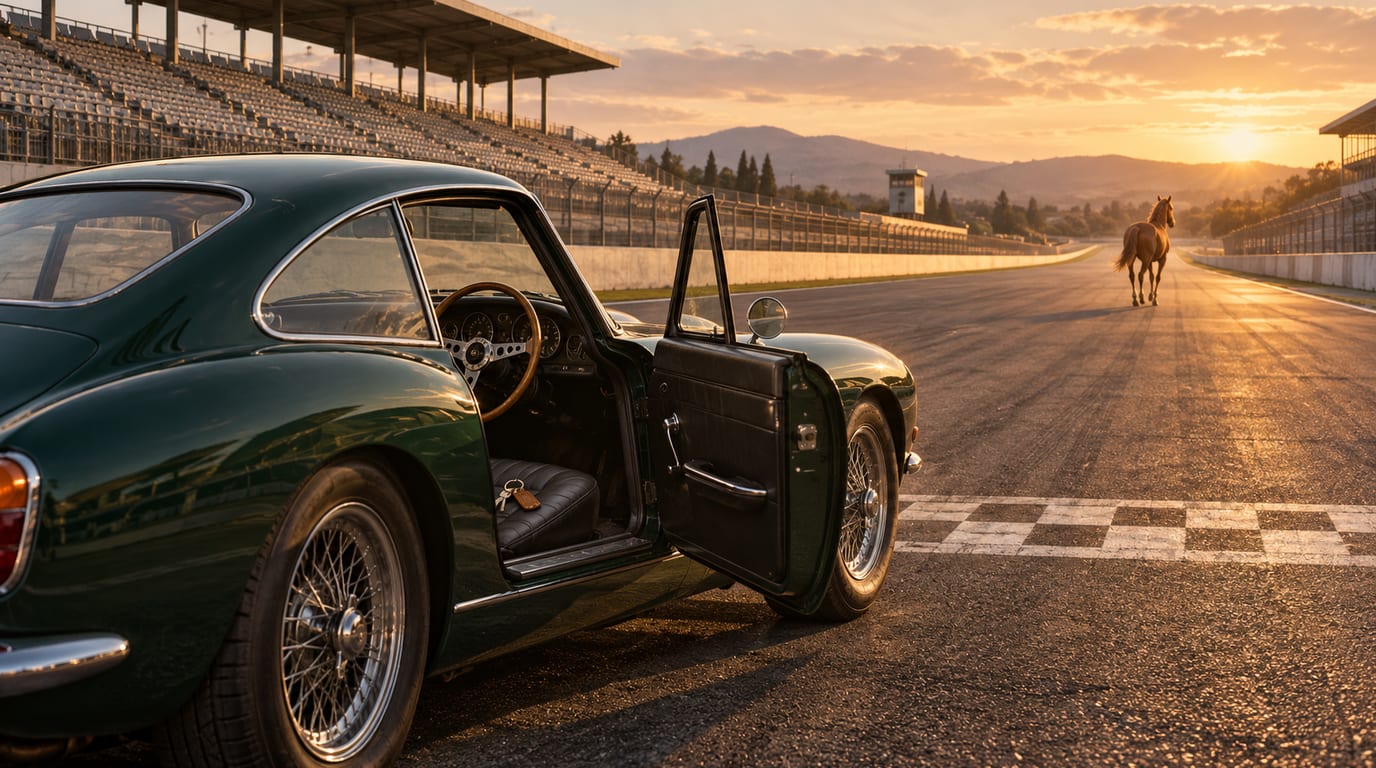
Take the horse. Long before the car, we found a simple trick for dealing with an animal that could outrun us: we climbed onto its back. Later we built the car, and that settled the matter for good. A horse cannot drive a car. If a human and a horse had to race today, the human would be behind the wheel, and nobody in their right mind would bet on the horse.
The lion is the same story. Nobody sensible fights a lion with their fists. Over thousands of years we went from sharpened sticks to spears, then bows, then guns, and if a human ever has to face a lion today, the human is the one bringing the gun. As for the elephant, we built cranes, forklifts and trucks, a whole world of machines that can lift far more than any animal ever could.
Look closely and the pattern is always the same. The winner is never the human with bare hands. It is the human with tools, and these days, the human with machines.
The Car Cannot Even Move on Its Own
Now let us spice things up a little. Forget the animals for a moment. What happens when a human has to compete against the tools themselves?
Imagine a human up against a gun, for example. Who wins?
It sounds like a silly question, because the answer is obvious once you picture it. A gun lying on a table has never won anything. It does not aim, it does not decide, and it does not pull its own trigger. The real contest is between you and whoever is holding it. If you want the longer version of that story, with samurai and matchlock guns, I told it in the Tanegashima Shift.
The car works the same way. We like to say that a human cannot beat a car in a race, but that is not quite right. What a human cannot beat is a car with a driver in it. A car by itself cannot beat anybody, because a car by itself cannot even move. Park one on the starting line with nobody inside, and it will still be sitting there long after the slowest runner has crossed the finish line. Trucks and cranes are no different.
Yes, I know some cars can drive themselves now, at least in a growing number of cities. But even then, somebody still has to get in and tell the car where to go. Keep that in mind, because it will matter later.
None of this is surprising, and you may already have picked up two lessons along the way.
The first is simple: do not race a horse. Or if you really must, never do it with your bare hands. Bring a car, or at the very least a motorbike.
The second is easier to miss: the winner is never the car. It is the human driving it.
There is also a twist in that marathon story from Wales. I said it took until 2004 for a runner to beat the horses, but a human had already beaten them fifteen years earlier, back in 1989. His name was Tim Gould, and he did it on a bicycle. He did not need a car, or even a motorbike. Two wheels and a pair of pedals were enough.
The Race My Learners Are Afraid of Losing

Now, what if I told you that this pattern is just as true in the age of AI?
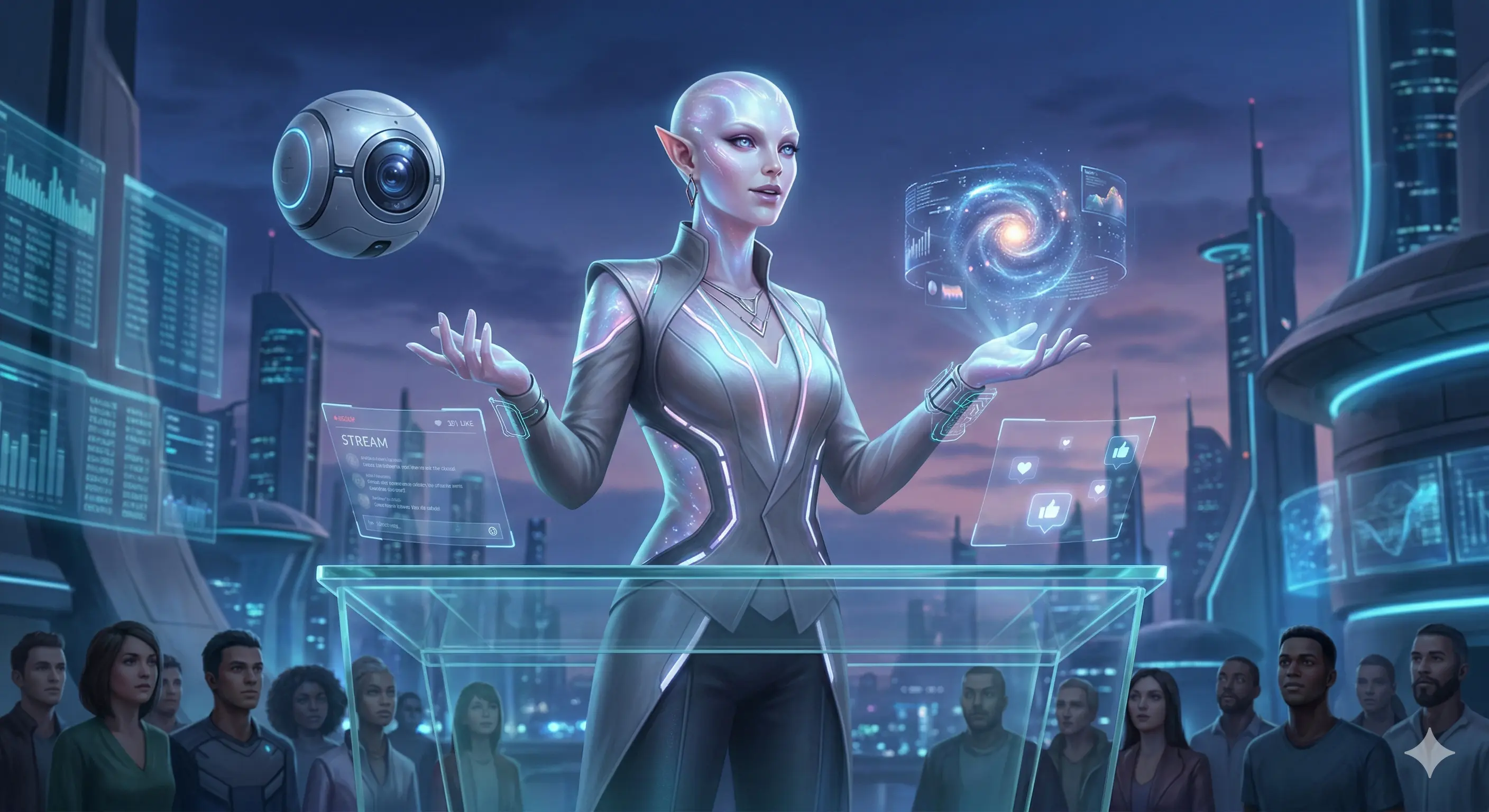
This is where my learners come in, along with the moment I mentioned at the start. So many of them are worried that AI is going to replace them. The words change from person to person, but the worry underneath is always the same: AI can already write this faster than I can. Why would anyone hire me? What is the point of learning to code now?
Let me be clear that I do not find the worry itself funny. It is real, it is understandable, and I take it seriously every time I hear it. What I find amusing is the race they are worried about losing.
If you race a horse, then yes, the horse is faster than you. That has been true for as long as there have been horses, and no amount of training will change it. In the same way, if you race AI at the things AI is already good at, then yes, AI is better than you too. The worry is not wrong. The race is.
And it is easy to see how so many learners end up in that race. Universities still spend a lot of time on the very things AI does best: writing a loop, implementing a small and well-defined task, turning a clear specification into working code. Spend years training only for that, and you have spent years training for a footrace against a horse.
That is a big part of why we rebuilt the Skill-Wanderer curriculum to put AI agents first. Our learners start by working with an AI agent and learn to read code before they write it by hand, because that is much closer to the job they will be doing.
Do Not Race the Horse. Build the Car.
So how do you beat a horse?
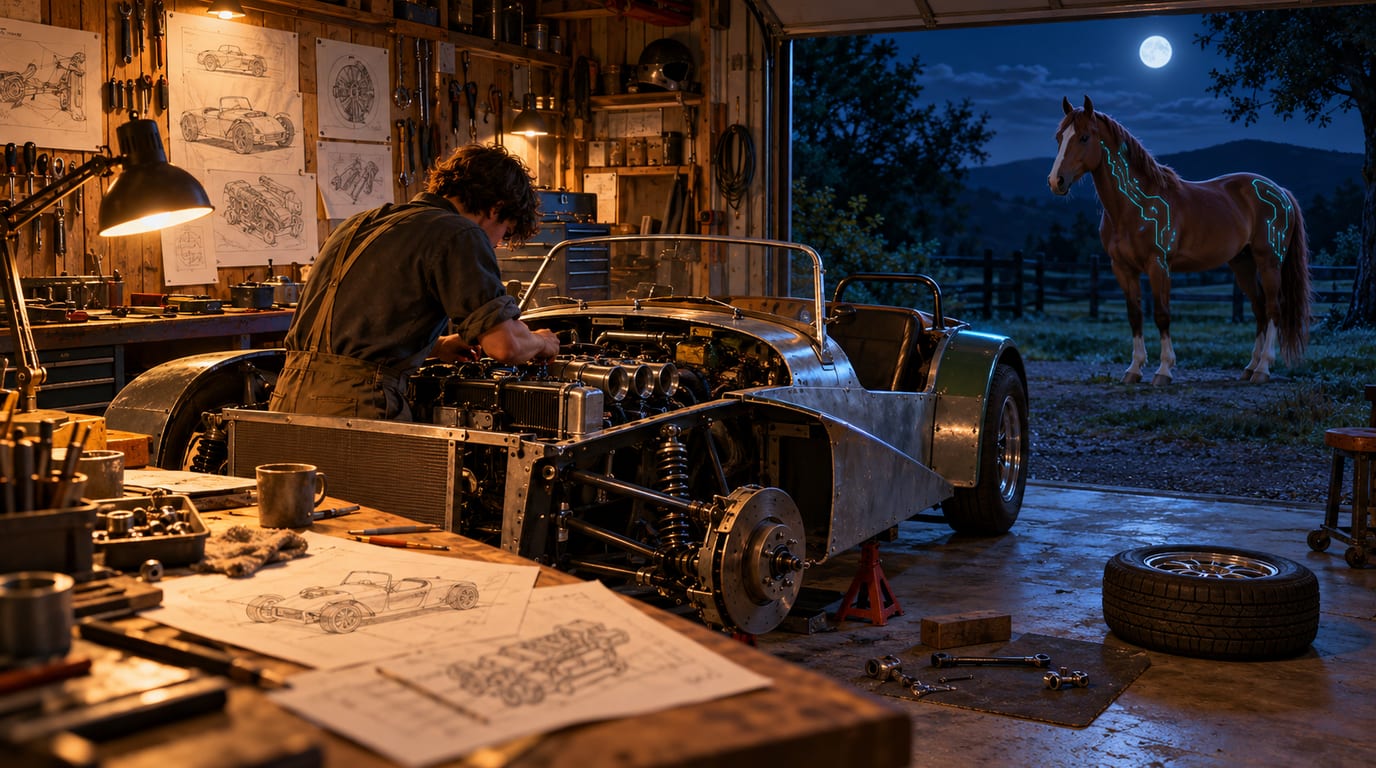
The first lesson is the one our ancestors learned long ago: do not try it with your bare hands, and put your effort into what the horse is not good at. A horse is fast and strong, but it will never build a car. That was a contest we could win, so that is where we competed.
In the AI era, the lesson carries over almost word for word. Do not try to beat AI at what it is already good at. Compete on what it is bad at, and then bring that advantage home.
That last part matters. Our ancestors did not win by training harder to run. They won by doing something the horse could not do at all, and then they came back to the very same race with a car and won it easily. Getting good at what AI cannot do is not about avoiding the work AI does. It is about coming back to that work with an advantage the AI does not have.
There is something else hiding in this story, too. Remember how we first dealt with the horse: we did not outrun it, we rode it. The same animal that leaves you behind in a race will carry you for miles once you learn to ride it, and AI works exactly the same way. Race it, and it beats you. Drive it, and it takes you further than you could ever run on your own. The AI does not change. What changes is where you decide to stand: on the starting line next to it, or in the driver’s seat.
Better Than My Father, Just Not at His Game

Long before AI came along, I had to learn this lesson the hard way, in my own family. It started with a Vietnamese saying:
Con hơn cha là nhà có phúc.
It roughly means that when a child grows up to be better than their father, the family is truly blessed. It is not about rivalry: for Vietnamese parents, a child who goes further than they did is a source of pride.
Naturally, I took it seriously, almost as a duty. My first attempt at it did not end well.
My father was a well-known name in import and export, especially in the oil and gas business. So when it was time to choose my own career, I followed in his footsteps and dived head first into import and export. Like father, like son, as people say.
I tried, and I tried my best. But the more I tried, the clearer it became that the goal was nowhere in sight. The skills that field demands simply did not suit my personality, and no amount of effort was changing that.
Eventually I had to admit that this was a race I could not win. Or, more precisely, a race that would cost far too much to win, because winning it would have meant turning myself into a different person. Looking back, it was the same difference between “cannot” and “chose not to” that I wrote about in my last post. At the time, though, it simply felt like failure.
I was depressed for a while. Then I found out that people like me, who pick things up quickly and are always hungry for more, can be surprisingly resourceful in tech.
That was when I realised something that has stayed with me ever since. Being better than someone does not mean beating them by the book, on the ground where they are strong and you are weak. It means finding the ground where you are strong, and fighting there instead. All is fair in love and war, and there is no rule anywhere that says I had to beat my father at import and export.
So I dived head first again, this time into tech, and it suited me far better. Over the years I have made a small name for myself in Hanoi’s tech scene. It is nothing grand, but at least a few people admire my work. And in tech, I think I can finally say I have become better than my father. To be fair, it is a contest he never entered. But that is exactly the point.
The part I am most proud of is that, standing on my own ground, I could see a few changes coming that my father, standing on his, did not. I was sure that electric vehicles would one day be more popular than petrol and diesel cars. And I could see that AI would open new opportunities while closing old ones, the same way the internet and machines did before it.
I did not beat my father at his own race. I stopped running it, and found one I could actually win.
The good news is that with AI, you do not have to change careers the way I did to find your own ground. It is right there in the same field, in the parts of the work that AI is still bad at. Which leaves the obvious question: what are those parts?
What AI Is Still Bad At: Ideas and Control
From what I see in my own work every day, there are two big things: ideas and control.
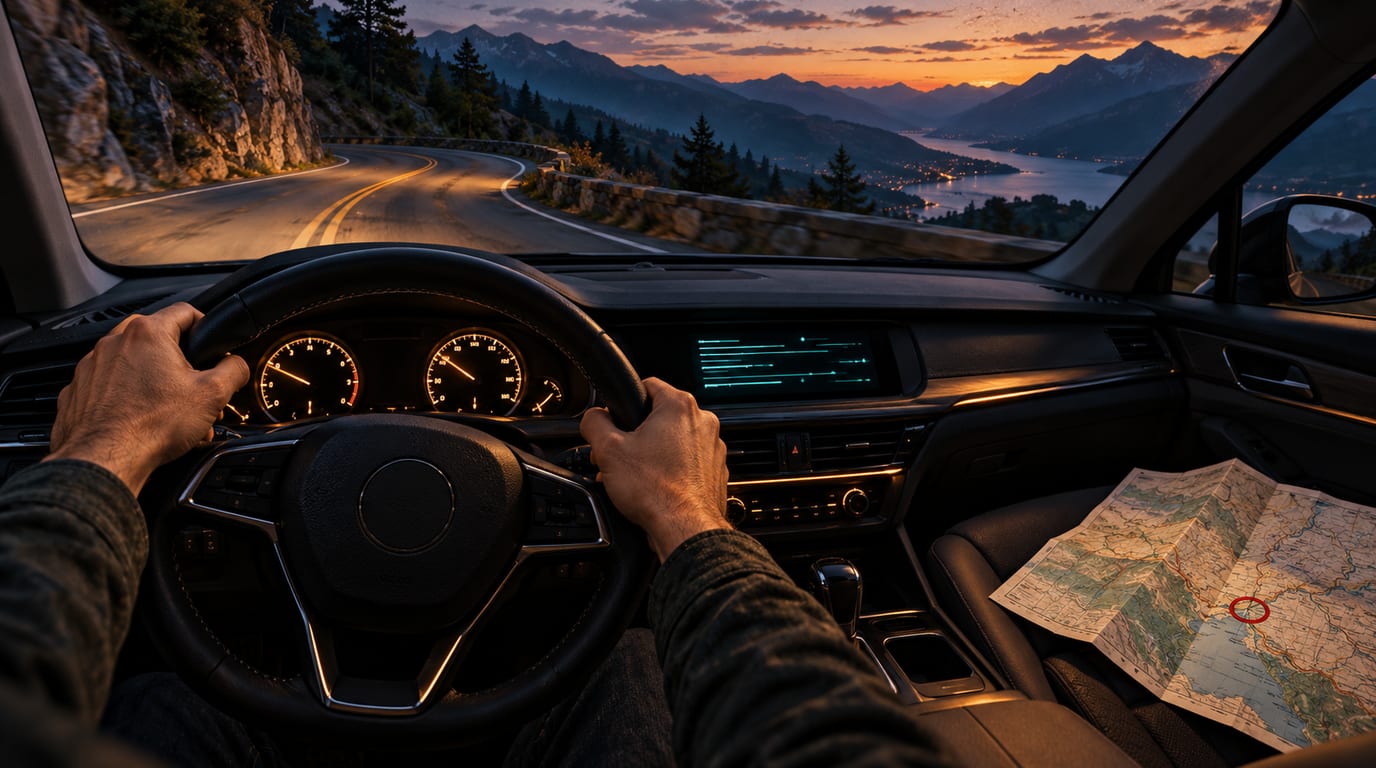
Ideas. AI still cannot decide what is worth doing. It does not set its own tasks, and it does not wake up one morning knowing which app the world needs, who it is for, or why anyone would pay for it. Ask it to build something and it will happily build it, but it will almost never stop, unprompted, to tell you that you are building the wrong thing, which is one of the most valuable things a good colleague can do. Choosing the destination is still a human job. Remember the self-driving car: even when it does all of the driving, somebody still has to get in and tell it where to go.
Control. The quality of AI work has improved enormously, and I mean that. But left on its own, it is still pretty lousy. It makes mistakes with total confidence, drifts away from what you asked for, and declares the job finished long before it is. The better models are in some ways even harder to supervise, because when they fail, they fail plausibly: what they hand you looks completely right and is quietly wrong.
I have seen this up close more than once. When I worked with partners on a payment feature using Stripe earlier this year, the AI wrote most of the code, and it still left behind a mess of loose ends that a human had to find and tie up. I have also seen a team hand real customer negotiations to an AI, which then cheerfully closed deal after deal at terms that lost the company money. Every step looked like a success, and the business still bled. (I wrote about both the value and the price of AI in the middle way.)
Put those two things together and you have a fairly good description of a driver. The driver decides where the car is going, and then keeps it on the road along the way: steering, checking the mirrors, and braking when something looks wrong. The car brings the speed. Everything else comes from the person behind the wheel.
You Do Not Lose to the Car. You Lose to the Driver.
That brings me back to the second lesson from earlier, and the part I most want my learners to hear.
When a runner loses a race to a car, they are not really losing to the car. They are losing to the person driving it.
We are not at the point where AI can take a real piece of work from start to finish on its own. At least, not yet. That means if you lose this race, you will not lose it to AI. You will lose it to a human who uses AI, and more and more often, to a human who uses several of them at once.
My own setup is a good example. I use a lot of AI agents, because each one has its own strengths and weaknesses, and I try to match each one to the work it does best. In my post on leading AI agents, I described how one of them writes the spec and helps with the design, another does the long, patient work of implementation, and a third comes in at the end for testing.
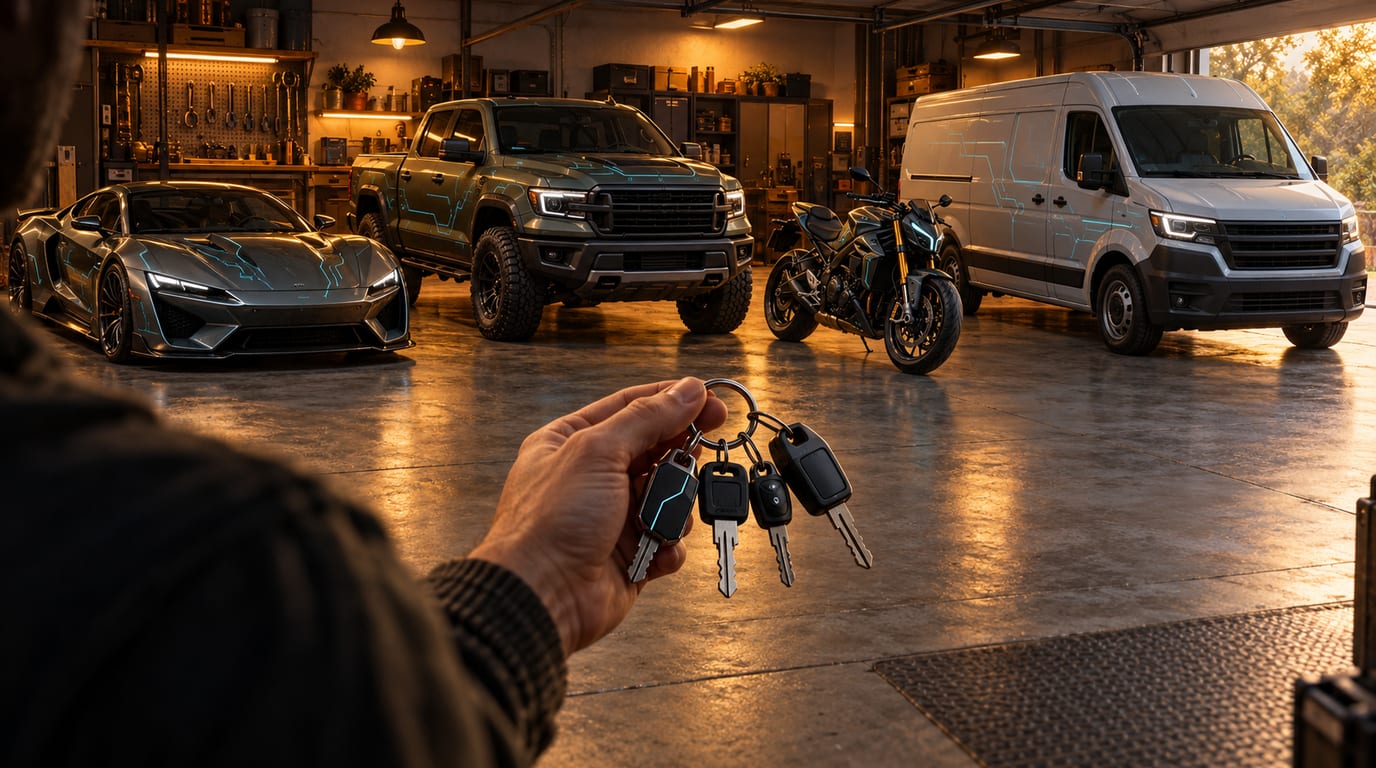
It is surprisingly similar to leading a team of people. It is also a bit like owning a garage: you do not take the truck to the race track, and you do not move house in a sports car. Part of being a good driver is knowing which vehicle the trip needs.
A good driver also owns the drive. When something goes wrong, one of the phrases I hear most often from learners is “it was my AI.” And honestly, it usually was. But when a car ends up in a ditch, nobody asks the car what happened. They ask the driver. The moment you pass on the AI’s work with a shrug, you have stopped being the driver.
The competition was never you against the machine. It is you against the people who have learned to drive it.
Learn to Drive, Not to Run

In the end, if you want to beat the horse, the skill you need is not running. It is driving. They are simply different skills, and getting faster at one does very little for the other. No amount of sprint training will help you parallel park.
And yes, AI does make some old skills obsolete, or at least changes what they are for, much as the car did with running. Plenty of people still run today, but they run for their health, not to get to work. Very few people plan their commute around their 10K time.
The skills AI already handles well are heading the same way. Writing a loop by hand is still good exercise. It keeps your mind fit, and it helps you understand what the AI hands back to you, which is what you need when it is your turn to take control. Just do not make it the race you are training to win.
What should you train for instead? The skills that matter, not the ones AI is already good at. In other words, the skills that make you the driver:
- Deciding what is worth building, and for whom.
- Explaining the job clearly enough that the AI can do it well.
- Reading what comes back with a critical eye, and knowing when it is wrong.
- Choosing the right tool for each part of the work.
- Owning the result once it ships, good or bad.
Nobody is born with any of these. Like almost everything else, they can be learned, and right now I would argue they are the skills most worth learning.
You might be smiling by now if you read that last post, because I confessed there that I cannot drive a car. I chose not to learn, since a taxi gets me anywhere I need to go. That works perfectly well for getting around town. It does not work in a race, though, because nobody has ever won one from the back seat. With AI, I made the opposite choice, and these days most of my working day is spent in the driver’s seat: deciding what to build, and directing the AI that builds it.
So tell me: which race have you been training for? And is it one you can actually win?
Ready to Join the Journey?
If our mission to provide honest, accessible, and free education resonates with you, here’s how you can be part of it:
- 🌐 Visit our platform: skill-wanderer.com
- 📚 Start learning: dojo.skill-wanderer.com
- 📝 Read more: wanderings.skill-wanderer.com
Leave the running to the horse, and learn to drive. See you next time.